

KINESIO TAPING
what is kinesio taping?
Kinesio taping supports muscles and joints without restricting freedom of movement. The elastic tape stimulates microcirculation and lymphatic drainage, supports the connective tissue, and helps the body move more smoothly.
Unlike traditional sports tape, which is primarily intended to immobilize, kinesiotape moves with the skin. This allows for natural movement while muscles and fascia are subtly supported.
OPERATION
Kinesiotape is applied with a specific tension and moves with the skin. Due to the wave pattern on the inside, the skin is slightly lifted, resulting in less pressure on the underlying muscle tissue.
Depending on the method of application, kinesiotape can have different effects. For example, in the case of an anterior cruciate ligament injury, tape with more tension can help activate and support the quadriceps. For heel complaints caused by irritation of the plantar fascia under the foot, tape can be applied with limited tension to reduce pressure and lower pain signals.
In this way, kinesiotape supports the body without restricting natural freedom of movement.
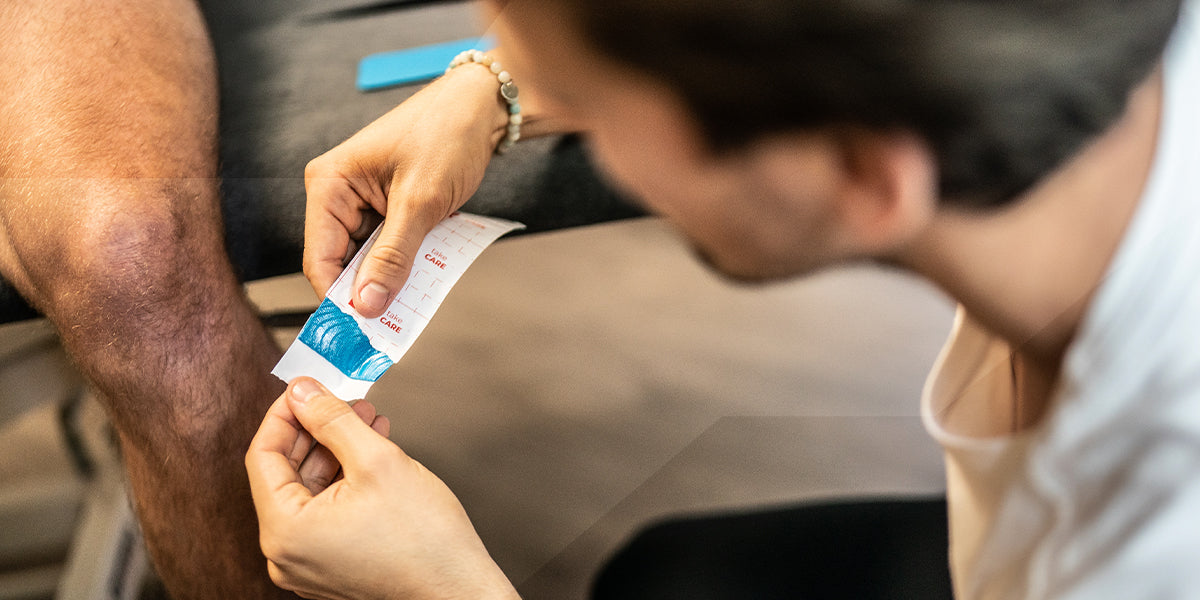
What can you expect from kinesio tape?
What can you expect from kinesiotape?
Kinesiotape can help support muscles and joints and is often used for musculoskeletal complaints. The tape can contribute to pain relief, support, and greater freedom of movement.
It is important to know that kinesiotape is not a standalone treatment. It works best as a supplement to a broader recovery plan, for example in combination with targeted exercises, rest, mobility training, or guidance from a specialist.
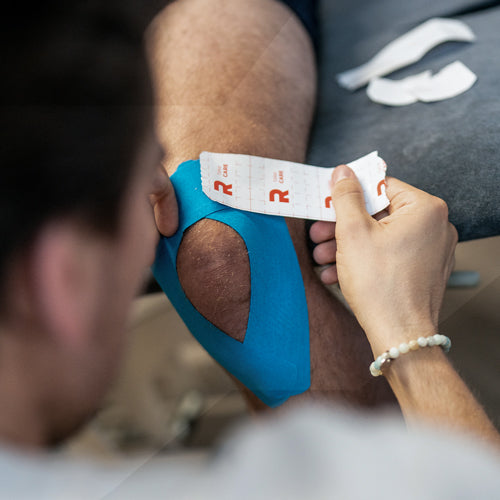
When can kinesio tape help?
Depending on how (under what tension) the kinesio tape is applied, it can be used for, among other things: supporting muscles, proprioception (muscle stability during/with mobility) and relieving the fascia:
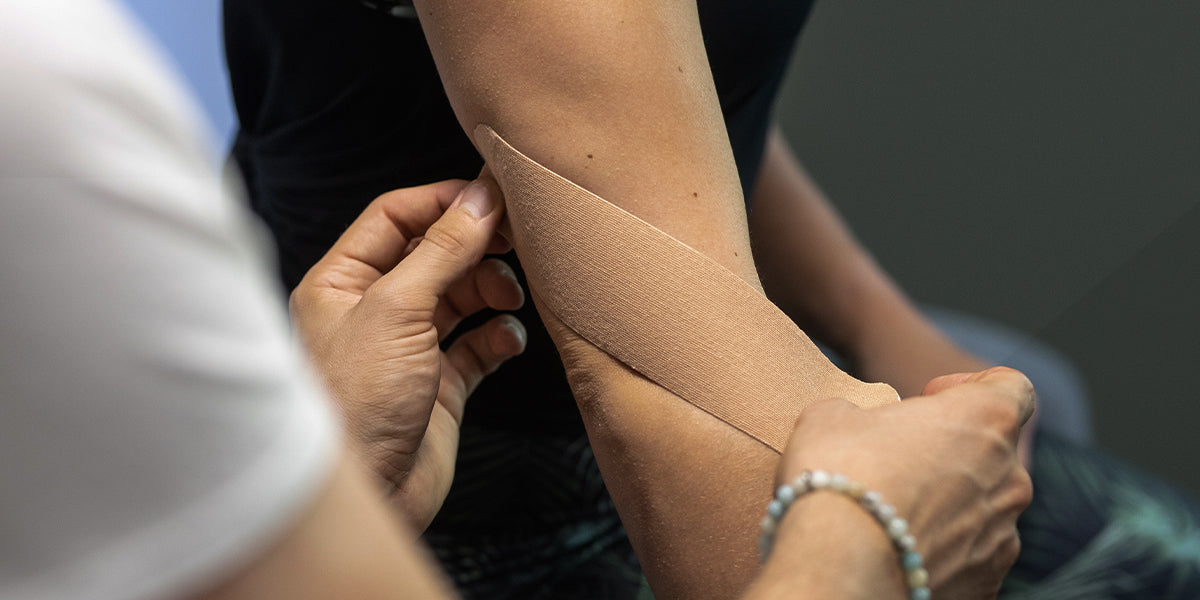
TO SUPPORT
Kinesiotape can provide extra support to muscles and joints without restricting freedom of movement. The tape helps to reduce excessive stretch or tension in the muscle, thereby supporting the body during movement, sports, or recovery.
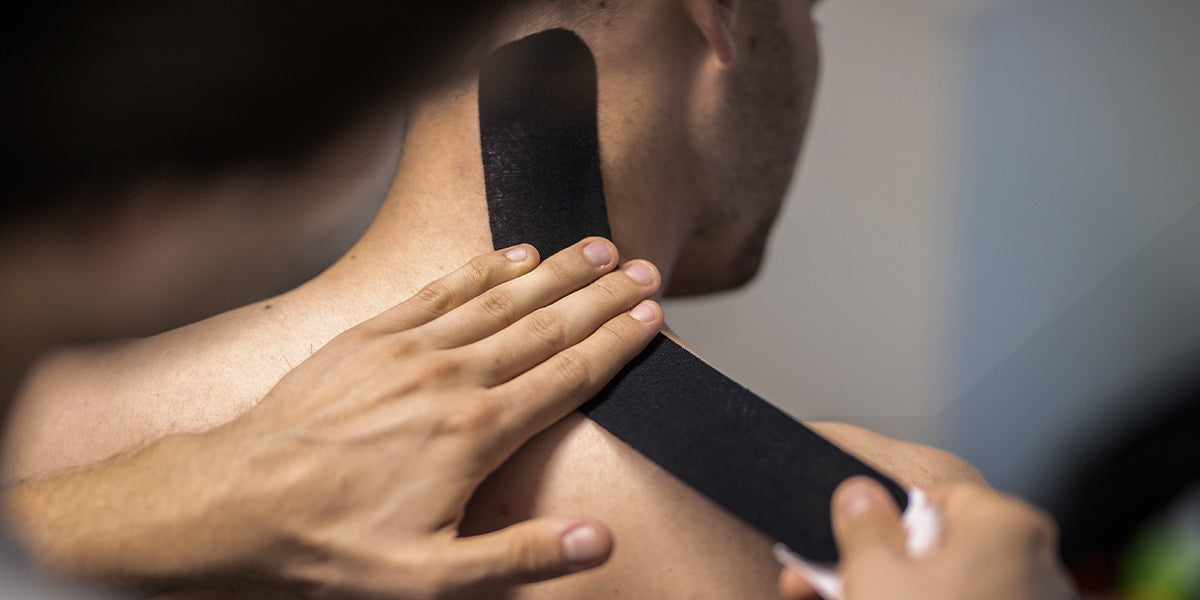
ACTIVATE
Kinesiotape can help to consciously reactivate muscles. This can be useful when muscles function less effectively due to overuse, injury, or poor posture. The tape stimulates the muscle to cooperate better during movement.
IMPROVE FREEDOM OF MOVEMENT
Kinesiotape can contribute to a freer and more comfortable sense of movement. Because the tape moves with the skin and does not provide rigid support, natural mobility is preserved. As a result, kinesiotape can feel comfortable during sports, recovery, or daily movement.
HOW DO YOU APPLY KINESIOTAPE?
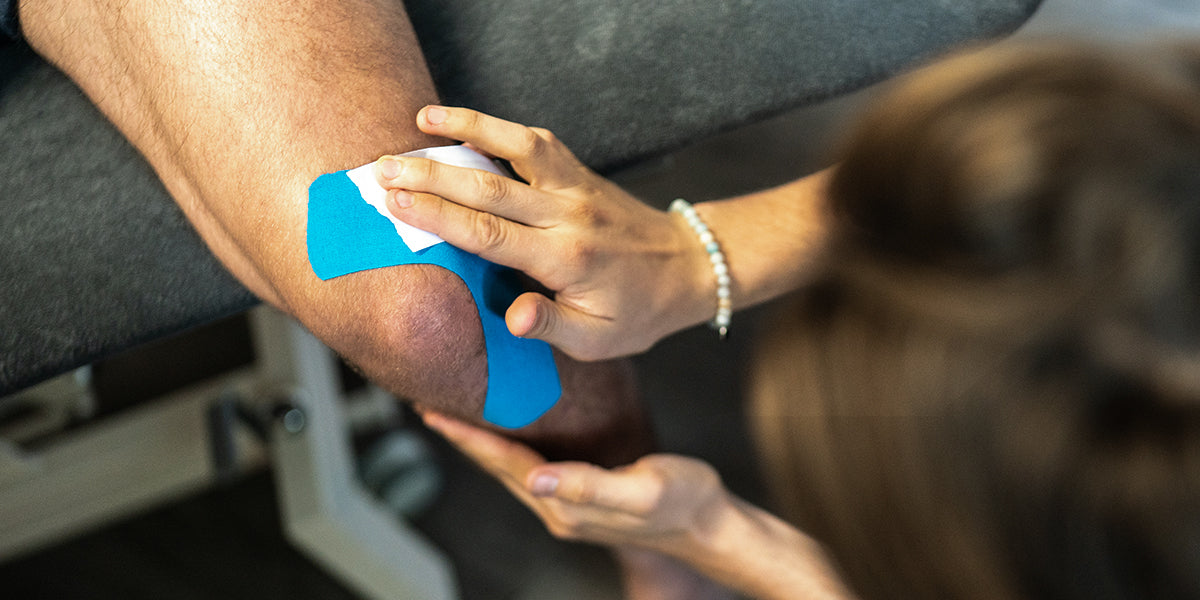
You can easily apply Kinesiotape yourself. Ensure the skin is clean, dry, and free of grease. Apply the tape on or around the painful area with light stretch, without putting too much tension on the skin.
Round off the corners for better adhesion and briefly warm the tape with your hand after application. Does the tape feel uncomfortable or do the symptoms worsen? Then remove the tape and consult a specialist if necessary.
APPLICATION TIPS
The first and last 4 cm of the tape should be applied without any tension.
• Avoid wrinkling the tape and do not touch the adhesive side.
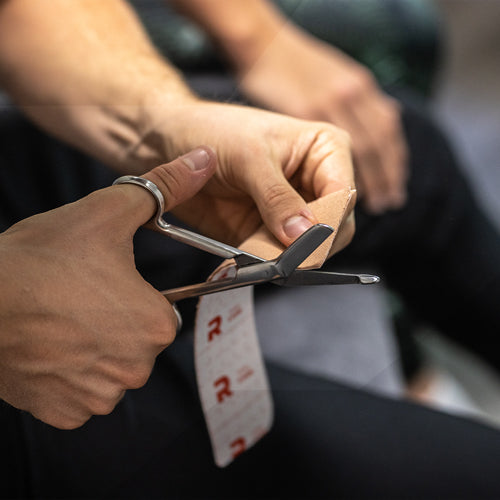
• Cut the ends into a rounded shape to prevent the angular sides from coming loose more quickly.
• Apply to the painful area and, if necessary, place several strips along both sides of the affected muscle.
• Remove immediately if skin rash (allergic reaction) occurs.
• Kinesio tape can be worn for between 3 and 5 days.
• Contact with water affects the wearing time.
Sources
(1) Lim, EC and MGTay, Kinesio taping in musculoskeletal pain and disability that lasts for more than 4 weeks: is it time to peel off the tape and throw it out with the sweat? A systematic review with meta-analysis focused on pain and also methods of tape application.Br J Sports Med, 2015. 49(24): p. 1558-66.
> VIEW SOURCE